
Baby Botox: What It Is, Who It's For, and Whether It's Worth It
July 24, 2026
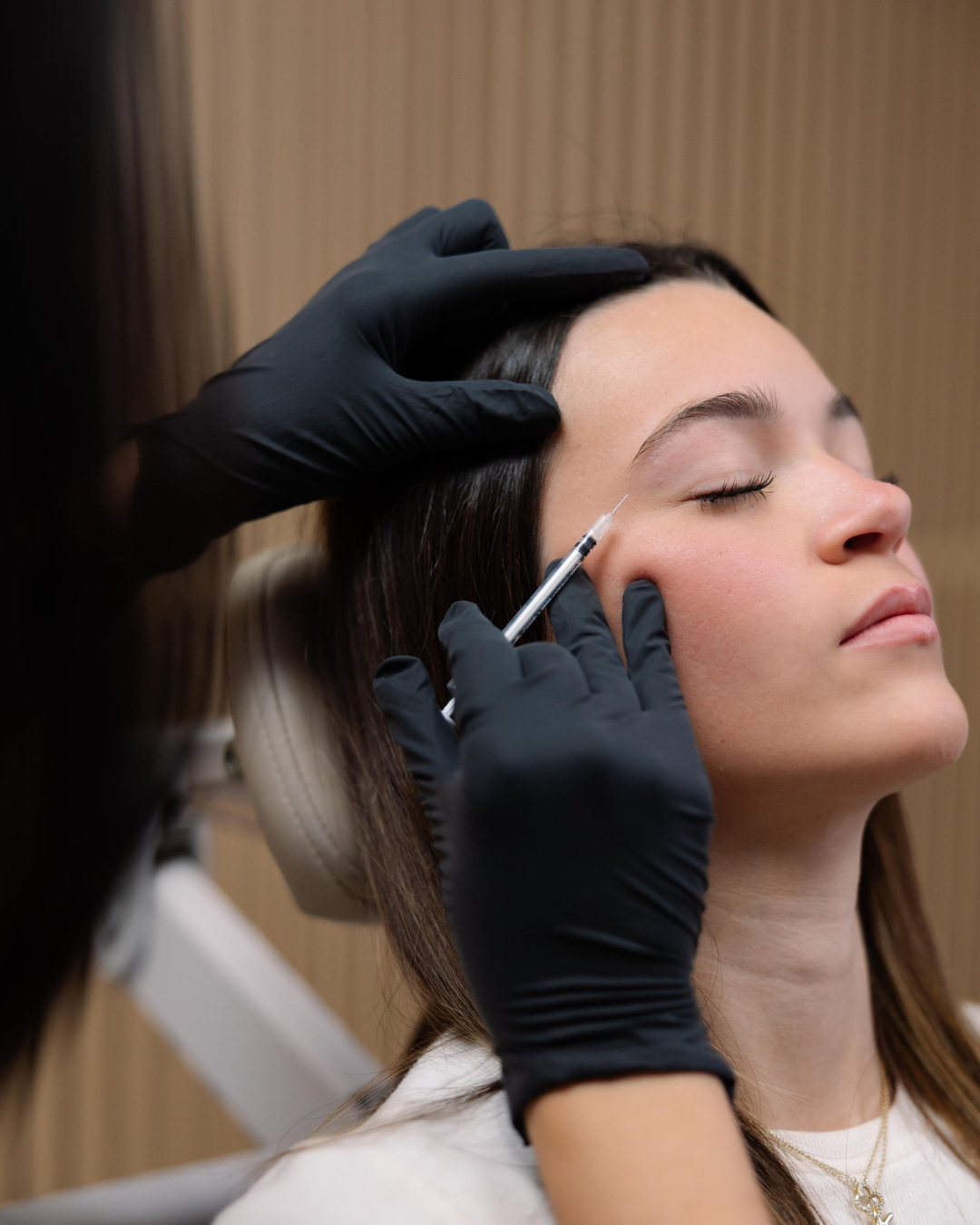
Baby Botox refers to neuromodulator injections administered at lower doses than a standard treatment — with the goal of softening expression lines while preserving natural movement. It is not a different product or a separate procedure; it is a dosing philosophy that produces subtler, more conservative results. At Natural State Aesthetics in Fayetteville, AR, we offer both Daxxify and Botox for neuromodulator treatments, and the baby Botox approach is a common requested option among first-time patients.
Best for: patients in their late 20s to early 40s who want preventative treatment, natural movement, or a first experience with neuromodulators without committing to a fully frozen look
Products we use: Daxxify and Botox — your provider will recommend the right fit for your goals and treatment plan
Units used: typically starting at 40-60 units of Daxxify or 20-30 units of Botox
Longevity: 2 to 3 months on average for Botox; Daxxify can last longer — up to 4 to 6 months even at conservative doses
Results: softened lines and reduced muscle movement while maintaining the ability to make natural facial expressions
What Is Baby Botox?
The term "baby Botox" gets used loosely, sometimes to mean a light treatment, sometimes to mean a specific injection technique, sometimes just as a trend label. The actual definition is straightforward: it is a reduced-dose approach to neuromodulator treatment that intentionally leaves more muscle activity intact than a traditional full treatment would.
Standard neuromodulator dosing aims to significantly reduce or eliminate muscle movement in the treated area. Baby Botox aims to reduce it partially. Enough to soften the appearance of lines and prevent the deepening of creases, but not so much that expressions are flattened. The needle placement is the same. The product is the same. What changes is how much is used and, sometimes, where precisely it is placed within the muscle.
This approach sits in between two major shifts in aesthetic treatments right now: the move toward natural results over obvious correction, and the growing interest in preventative treatment among younger patients. Both are legitimate reasons to choose a lower dose, and both require a provider who understands the difference between a lower dose by design and a lower dose by mistake.
Baby Botox vs. Standard Dosing: What Actually Changes
The core difference is movement. Standard neuromodulator treatment at full dose in the forehead or glabella (the area between the brows) will substantially restrict the ability to raise the brows or furrow. For many patients, this is exactly the goal — complete relaxation of the muscle means lines are fully smoothed and the effect lasts longer. For others, it creates a heaviness or a frozen quality they did not anticipate and did not want.
A lower dose leaves the muscle partially active. You can still raise your brows. You can still furrow slightly when you concentrate. Lines soften rather than disappear.
The practical tradeoff is longevity, and this is where product choice matters. Botox at a reduced dose typically lasts 2 to 3 months. Daxxify is long-lasting with gradual softening over time. This means your results won't just disappear one day. Instead, the muscle will slowly and subtly regain movement over a prolonged period. In Daxxify clinical trials, more than 50% of those treated had no or minor frown lines until 6 months after treatment per both physician's and patient's assessments, but can vary from person to person. Your provider will walk you through which makes sense for your goals and lifestyle at your appointment.
Who Is Baby Botox Actually For?
Baby Botox is not a one-size-fits-all recommendation, it is a dosing philosophy that fits certain goals and certain patients better than others. Understanding who benefits helps set realistic expectations before your first appointment.
First-time patients
If you have never had neuromodulator treatment before and are uncertain how your face will respond, or how you will feel about restricted movement, starting with a lower dose is a sensible approach. It gives you a preview of what treatment does without committing to a result that keeps your face frozen for months. If you love the outcome, your provider can adjust the dose up at your next appointment or you can keep at your baby Botox dose. Starting conservative is almost always easier than correcting an outcome that was too aggressive.
Patients in their 20s and early 30s
Preventative neuromodulator treatment — starting before lines become etched into the skin at rest is one of the most evidence-supported uses of these products. Dynamic lines, the kind caused by repeated muscle movement, gradually become static lines that are visible even when the face is at rest. Treating the muscle before this transition happens keeps the skin from developing those permanent creases in the first place. Baby Botox dosing is well-suited for this population because the goal is not correction, it is prevention. You do not need full muscle restriction to prevent a line from forming. You need enough reduction in repeated movement that the skin never gets a chance to crease deeply.
Patients with high-movement areas
Certain areas of the face — particularly the forehead and the area around the eyes — are highly expressive and benefit from a lighter approach. Full restriction in the forehead can cause the brows to feel heavy and drop slightly. A lower dose in the crow's feet area keeps the lines from deepening while still allowing the eyes to crinkle naturally when you smile. For patients who are not bothered by lines in these areas at rest but want to slow their progression, this approach offers targeted, subtle improvement.
Where Baby Botox Is Commonly Used
The reduced-dose approach can be applied to any area where neuromodulators are used. The areas where it is most commonly requested and most appropriate include:
• Forehead lines: horizontal lines that appear when raising the brows — reduced dose here preserves brow mobility and prevents the heavy-brow feeling some patients dislike with higher dose
• Glabella ("11s"): the vertical lines between the brows from furrowing — one of the most common first treatment areas; lower dosing softens the crease without eliminating all expression
• Crow's feet: fine lines at the outer corners of the eyes from squinting and smiling — preserves the natural crinkling of the eyes while slowing the deepening of the lines
• Bunny lines: diagonal lines across the nose bridge from scrunching — a smaller area that responds well to reduced dosing
• Lip lines and lip flip: small amounts above the upper lip soften vertical lip lines and can gently flip the lip border upward for a slightly fuller appearance — a highly technique-sensitive area where less is almost always more
• Brow lift: strategic low-dose placement to relax the muscles that pull the brow downward, allowing the elevating muscles to lift the brow slightly — a subtle effect that pairs well with this approach overall
Daxxify vs. Botox for Baby Botox: Does It Matter Which You Use?
It does, and this is a conversation worth having at your appointment rather than making assumptions about. Botox and Daxxify are both FDA-approved neuromodulators that work by temporarily relaxing the target muscle, but they differ in formulation and, sometimes, in how long they last.
Botox has been the industry standard for decades and has an extensive safety record. At conservative doses, it typically lasts 2 to 3 months which means more frequent appointments if you're committed to staying on a schedule.
Daxxify is a newer neuromodulator formulation that uses a peptide-based carrier, which differentiates it from other products on the market and can contribute to its longer duration. Clinical data has shown it tends to last longer than Botox on average, though results vary from patient to patient depending on metabolism, muscle strength, and treatment area. For some, that means fewer appointments per year to maintain the same conservative result — which is one of the reasons we tend to reach for it first at NSA. Your provider will give you a realistic sense of what to expect based on your individual history at your consultation.
What to Expect at Your Appointment
The consultation
Before any treatment at NSA, your provider will assess your facial anatomy, muscle strength, and existing line patterns. For a conservative treatment approach, this conversation also includes a discussion of movement preference — how much expression you want to retain, which areas matter most to you, and what your experience with previous treatments has been if applicable.
The treatment
Treatment is administered the same way regardless of dose — fine needle injections into the target muscles, taking 10 to 20 minutes depending on the areas treated. The reduced dose means the same number of injection points in most cases, with less product per site. Topical numbing is available but most patients find the treatment comfortable without it.
Onset and results
Neuromodulators begin working within 3 to 5 days, with full effect visible at 2 weeks. At conservative doses, results at 2 weeks will look noticeably softer than standard treatment — lines reduced, muscle movement present but dampened, the face relaxed without being restricted. If at your two-week check-in you feel you want slightly more relaxation in a specific area, a small touch-up can be added at that point. Building up conservatively is always easier than waiting out an overcorrection.
Frequently Asked Questions
Q: What is baby Botox and how is it different from regular Botox?
Baby Botox is a reduced-dose approach to neuromodulator treatment — using the same products (we offer Daxxify or Botox) at a lower amount. The lower dose softens lines and reduces muscle movement without fully restricting expression, producing a more natural result. It is a dosing philosophy, not a separate product. The tradeoff with Botox is slightly shorter duration; Daxxify at conservative doses can last considerably longer than Botox at any dose, making it a strong option for patients who want natural results without frequent appointments.
Q: Is baby Botox good for beginners?
Yes. A conservative first treatment is an appropriate approach for first-time patients. Starting at a lower dose lets you experience how your face responds to neuromodulators, how you feel about reduced muscle movement, and whether you want to adjust in either direction at your next appointment. It removes the risk of an overcorrected first result that takes months to wear off. Most providers who specialize in natural outcomes recommend starting conservative and building from there.
Q: What age should you start baby Botox?
There is no single correct age, but most providers recommend considering preventative neuromodulator treatment when you start noticing dynamic lines — lines that appear consistently with expression — that you'd prefer not to become permanent. For many patients this is in the mid to late 20s. A conservative dose is well-suited for younger patients because the goal is prevention rather than correction.
Q: How long does baby Botox last?
It depends on the product used. Botox at a reduced dose typically lasts 2 to 3 months. Daxxify at a conservative dose can last 4 to 6 months. For patients committed to a natural, low-dose approach, Daxxify is often the more practical choice because it extends the time between appointments without requiring a higher dose to do so.
Q: Can baby Botox prevent wrinkles?
Yes, and this is one of the strongest evidence-based arguments for it. Dynamic lines that are caused by repeated muscle contraction gradually become static lines visible even at rest. Reducing muscle contraction through preventative neuromodulator treatment slows this process and can prevent lines from becoming permanently etched into the skin. A conservative dose achieves enough muscle reduction to provide this preventative benefit without requiring full restriction.
Q: Will I still be able to make facial expressions with baby Botox?
Yes. That is a primary reason patients choose this approach. A conservative dose intentionally leaves muscle activity intact, so you can still raise your brows, squint, smile, and express naturally. Lines will be softer and less deep, and repetitive creasing is reduced, but the face moves. Patients who found standard treatment made them feel frozen or expressionless often find a lower dose is the right balance between improvement and naturalness.
Q: What is the difference between Daxxify and Botox for this treatment?
Both are FDA-approved neuromodulators that temporarily relax muscle movement. The key difference is duration. Botox at a conservative dose lasts approximately 2 to 3 months. Daxxify uses a unique peptide-based formulation that binds more effectively and can last significantly longer.
Not Sure Which Approach Is Right for You?
The best neuromodulator treatment is the one matched to what you want, not the one with the highest dose or the most dramatic before-and-after. Some patients want full correction. Some want a lighter hand. Some are in their 20s trying to get ahead of lines that haven't fully formed yet. All of those are legitimate goals and all of them have a right answer.
At Natural State Aesthetics, we don't have a standard protocol we apply to every face. We have a conversation about what you're trying to achieve, we look at your anatomy and your muscle movement, and we recommend what will get you to your goals. Whether that's a conservative dose of Daxxify, standard Botox, or something in between.